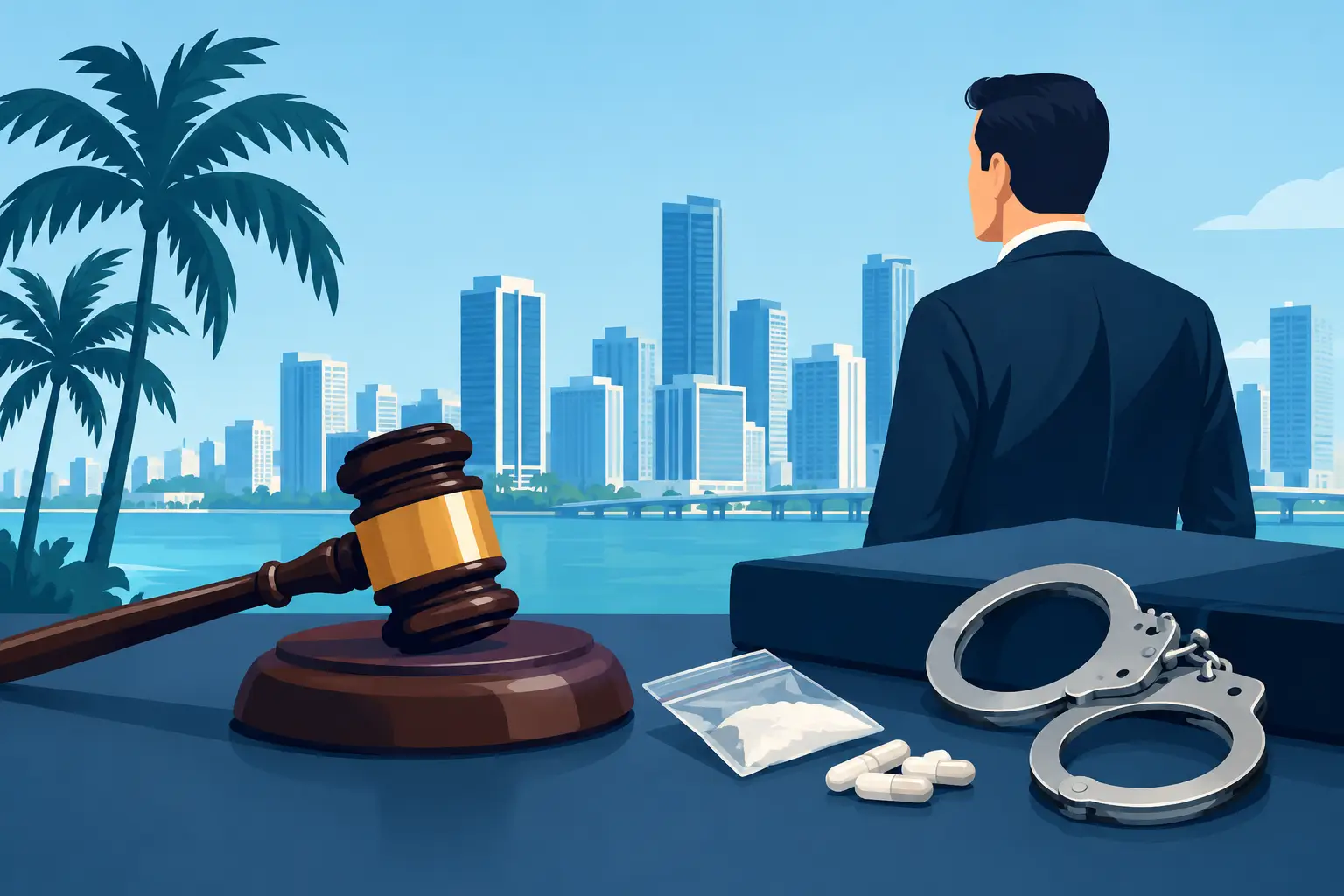
A drug arrest can move quickly in Miami-Dade County. Police may seize a phone, search a vehicle, question friends or family members, and seek statements before you understand the allegations. Knowing how to fight drug charges starts with protecting your rights immediately and getting an experienced defense lawyer involved before the prosecution's version of events hardens into the case record.
Drug allegations are not all alike. A small amount of a controlled substance, an accusation of possession with intent to sell, and a state or federal trafficking investigation carry very different risks. The right defense depends on how law enforcement obtained evidence, what prosecutors can actually prove, and whether constitutional violations occurred.
Do Not Give the Government More Evidence
After an arrest or contact with law enforcement, remain calm and avoid trying to explain the situation away. A statement that seems harmless can later be presented as an admission of knowledge, ownership, intent to sell, or involvement with another person.
You have the right to remain silent and to request counsel. Clearly state that you want a lawyer and do not want to answer questions. Do not consent to a search of your person, vehicle, residence, phone, or other property without legal advice. Law enforcement may search in some circumstances without consent, but voluntarily agreeing to a search can eliminate an issue your attorney might otherwise challenge.
Do not delete messages, discard property, contact alleged witnesses to coordinate stories, or post details online. Those actions can create separate problems and may be portrayed as consciousness of guilt. Instead, write down what you remember as soon as you can: where officers stopped you, what they said, who was present, whether they showed a warrant, and how any search occurred.
If police have contacted you but have not arrested you, early representation can be especially valuable. An attorney may be able to communicate with investigators, evaluate whether you are a target or witness, and help you avoid an interview that is not in your interest.
Understand What Prosecutors Must Prove
Florida drug cases are commonly charged under Chapter 893 of the Florida Statutes. Depending on the facts, prosecutors may allege simple possession, possession with intent to sell or deliver, sale or delivery, manufacturing, or trafficking. Federal cases in the Southern District of Florida may involve the Controlled Substances Act, conspiracy allegations, interstate activity, or larger investigations involving multiple defendants.
Possession is not always as simple as finding drugs near someone. The prosecution generally must establish that the accused knew about the substance and had possession or control over it. When drugs are found in a shared apartment, borrowed vehicle, workplace, or area accessible to several people, knowledge and control can become central contested issues.
For intent-to-sell and trafficking cases, the government may rely on drug quantity, packaging, scales, cash, messages, surveillance, or alleged statements. Each item requires scrutiny. Quantity alone may trigger serious charges under Florida law, but it does not erase the prosecution's burden to prove the required elements with admissible evidence.
Challenge the Stop, Search, or Seizure
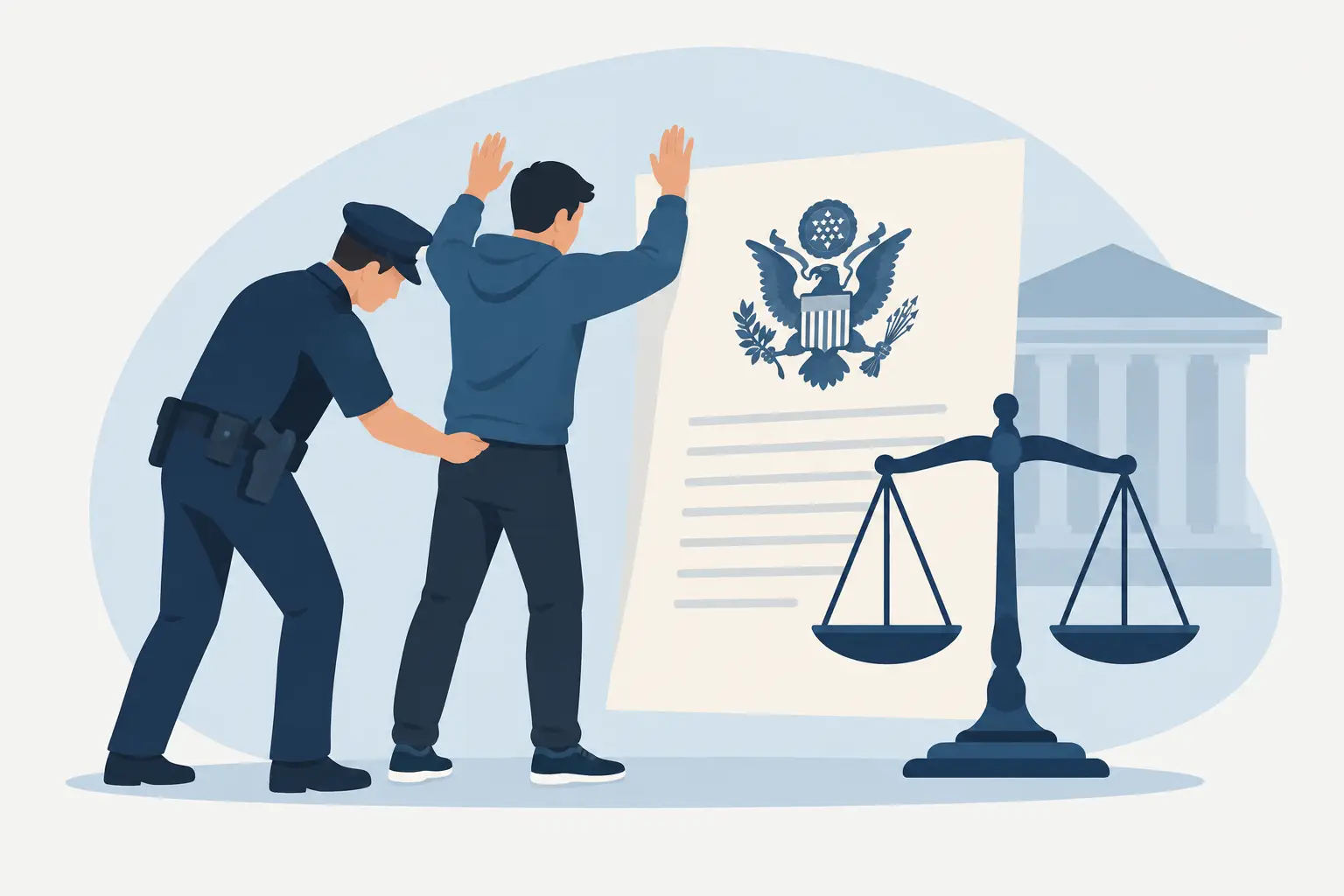
A strong defense often begins with the Fourth Amendment. Police cannot stop, search, or seize people and property without meeting constitutional standards. The question is not whether officers suspected criminal activity in hindsight. The question is whether they had a lawful basis at each stage of the encounter.
Vehicle stops and roadside searches
A traffic stop generally requires a lawful reason, such as an observed traffic violation or reasonable suspicion of criminal activity. A valid stop does not automatically authorize officers to search the vehicle. The scope and justification for a vehicle search matter, as does whether the driver or occupant gave consent.
Cases involving the odor of marijuana, a canine alert, an alleged plain-view observation, or a search incident to arrest can be legally fact-specific. Video from body cameras, dash cameras, nearby businesses, or residential security systems may be critical to determining what actually happened.
Home searches and warrants
A home receives the highest constitutional protection. Officers usually need a valid warrant to enter and search a residence, subject to limited exceptions. Defense counsel may examine whether the warrant affidavit established probable cause, whether the warrant described the place and property to be searched with sufficient particularity, and whether officers exceeded the warrant's scope.
If evidence was obtained through an unlawful search, a defense lawyer can seek suppression. Suppression is not automatic, and the government may argue an exception applies. Still, a successful motion can exclude seized drugs, statements, phone data, or other evidence that the prosecution needs to proceed.
Examine the Evidence, Not Just the Arrest Report
An arrest report is an accusation, not proof. Police reports can omit context, rely on assumptions, or conflict with video, dispatch records, forensic testing, and witness accounts. A careful defense review looks beyond the initial narrative.
The substance itself must be properly identified and connected to the defendant. Laboratory testing, chain-of-custody records, packaging, field-test reliability, and the exact weight can all matter. In trafficking cases, a small difference in net weight or the treatment of mixtures can have major sentencing consequences.
Digital evidence deserves equally close attention. Text messages, social media activity, location data, and information taken from a phone may be ambiguous or attributable to another user. Accessing a phone can also raise separate warrant and privacy issues. A lawyer should evaluate how the data was obtained, whether it is complete, and whether it truly proves knowledge or intent.
Consider Defenses Based on Knowledge, Possession, and Intent
Many drug cases turn on what a person knew and controlled. If contraband was found in a car with several occupants or in a residence shared by roommates, the state may face difficulty proving constructive possession. Proximity alone is often not enough.
Other defenses may involve mistaken identity, unreliable confidential informants, entrapment concerns, flawed surveillance, or an innocent explanation for cash, communications, or travel. In some cases, the defense is not that every government fact is false, but that the evidence does not prove the specific charge beyond a reasonable doubt.
The available strategy depends on the evidence and the charge. A person accused of possessing a small amount of a substance may face different options than someone alleged to be part of a multi-person trafficking conspiracy. A federal investigation can also involve recorded calls, search warrants, cooperating witnesses, and substantial discovery that requires early, detailed review.
Act Early in State and Federal Drug Cases
The first court date, bond conditions, filing deadlines, and opportunities to preserve evidence can arrive quickly. In Florida state court, your lawyer can address release conditions, seek discovery, investigate witnesses, and identify legal issues before evidence is lost. A case may be resolved through dismissal, reduced charges, a negotiated resolution, diversion where legally available, or trial preparation. No responsible attorney can promise a particular outcome.
Federal drug charges often carry additional complexity. Federal sentencing can be affected by drug type and quantity, alleged role in the offense, criminal history, weapons allegations, obstruction claims, and acceptance-of-responsibility considerations. Cooperation decisions, plea discussions, and proffer agreements require particular caution because they can have lasting consequences. Do not make such decisions based on general advice from friends, codefendants, or investigators.
If you receive a subpoena, a target letter, a grand jury notice, or a request to meet with federal agents, do not ignore it. Prompt legal advice can help you understand the demand, protect applicable rights, and respond appropriately.
How to Fight Drug Charges With a Focused Defense Plan
The most effective way to fight drug charges is not to rely on one generic argument. It is to build a defense plan around the facts, the law, and the prosecution's actual evidence. That can include preserving surveillance footage, challenging an unlawful search, testing the reliability of forensic evidence, investigating alternative explanations, and preparing for the leverage points that arise as the case develops.
For people facing drug allegations in Miami or the Southern District of Florida, time matters. Speak with a qualified Miami criminal defense attorney as soon as possible, preferably before an interview, a search, or a court appearance. Early, informed decisions can protect options that may be far harder to recover later.
Last updated: November 18, 2026
Important Disclaimer
This article is for general informational purposes and does not constitute legal advice. Reading this article does not create an attorney–client relationship. If you need legal assistance, please contact us for a Free Consultation.