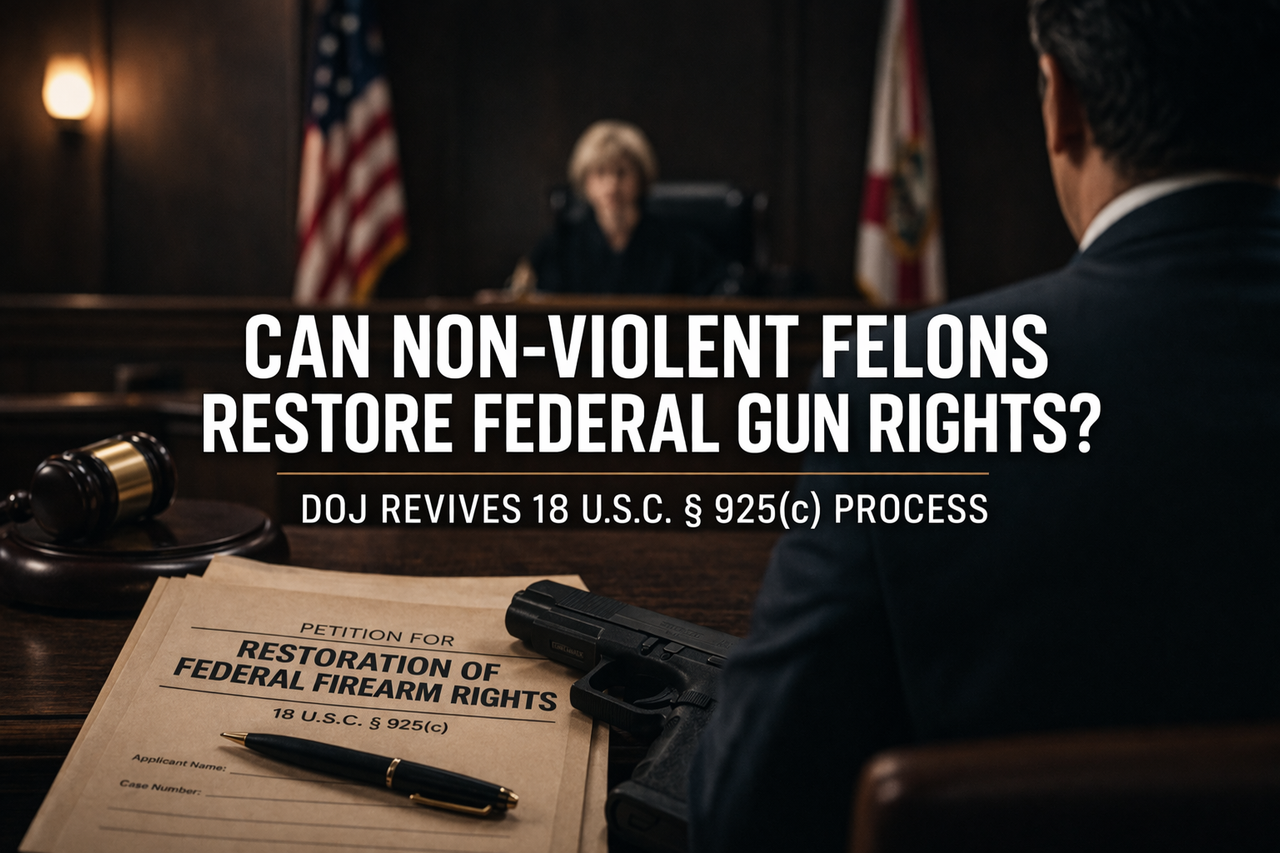
For decades, federal law has barred individuals with felony convictions from possessing firearms, even after they completed their sentences and rebuilt their lives. Although 18 U.S.C. § 925(c) provides a statutory pathway to restore federal firearm rights, the process has been unavailable for more than thirty years due to lack of funding. That is now changing.
What Is 18 U.S.C. § 925(c)?
Section 925(c) allows individuals with federal felony convictions to apply for relief from the federal prohibition on firearm possession. Historically, applications were reviewed by the ATF, but Congress stopped funding that process, effectively shutting it down for decades.
The Department of Justice is now working to revive this process through a new web-based application system, expected to launch following publication of a final rule.
Who May Qualify for Federal Gun Rights Restoration?
The revived process is expected to apply primarily to individuals convicted of non-violent federal offenses, including:
- White-collar crimes such as fraud and financial offenses
- Regulatory violations
- Certain non-violent drug offenses
Each application will be reviewed on a case-by-case basis, focusing on whether the individual poses a risk to public safety and whether restoring firearm rights would be consistent with the public interest.
How Applications Will Be Evaluated
The Attorney General is expected to consider several factors when reviewing petitions, including:
- Evidence of rehabilitation
- Employment history and stability
- Community involvement and character references
- Completion of all sentencing requirements
- Post-conviction conduct
Because these cases are highly discretionary, preparation and documentation will play a critical role in the outcome.
Federal vs. Florida Firearm Rights
For Florida residents, restoring federal firearm rights does not automatically restore rights under state law. Individuals may need to pursue both a federal § 925(c) petition and separate Florida executive clemency.
This makes early legal planning essential, especially for those with mixed federal and state convictions. You can learn more about how federal cases progress by reviewing our guide on the federal indictment process.
Why Early Preparation Matters
Once the DOJ portal opens, a large volume of applications is expected. Preparing early can help avoid delays and improve the strength of your petition.
Key documents may include certified judgments, proof of sentence completion, employment records, and letters demonstrating rehabilitation and community support.
Speak With a Federal Defense Attorney
If you are considering applying for federal firearm rights restoration, working with an experienced Miami federal criminal defense lawyer can help ensure your application is properly prepared and supported.
You can also explore related federal defense matters on our Miami Lakes federal defense page.
Get Help Now
If you or a loved one has a non-violent felony conviction and may qualify for federal firearm rights restoration, do not wait. Early action can make a significant difference in the outcome.
Contact our office today for a confidential consultation.
Last updated: April 2, 2026
Important Disclaimer
This article is for general informational purposes and does not constitute legal advice. Reading this article does not create an attorney–client relationship. If you need legal assistance, please contact us for a Free Consultation.