A federal agent does not need to knock on your door for your life to change overnight. For many people, the first sign of a serious federal investigation is a subpoena. If you are responding to grand jury subpoena papers, timing matters, silence matters, and early legal strategy can affect everything that follows.
A grand jury subpoena is not a routine request for information. It is a formal demand backed by the power of a federal criminal investigation. In South Florida, especially in the Southern District of Florida, these subpoenas often appear in cases involving fraud, healthcare billing, drug trafficking, money laundering, conspiracy, public corruption, and other high-exposure allegations. Even if you believe you did nothing wrong, how you respond can shape whether you remain a witness, become a subject, or face indictment.
What a grand jury subpoena really means
A grand jury subpoena usually requires one of two things. It may demand documents, electronic records, and communications, or it may order testimony before the grand jury. Sometimes it seeks both over time. Either way, the government is gathering evidence, building a timeline, and comparing your information with what it has already obtained from banks, employers, phones, business records, or other witnesses.
People often make a dangerous assumption at this stage. They think a subpoena means the government only wants information from them, not about them. That is not always true. You may be a witness. You may also be a subject of the investigation. In some situations, you may already be a target without being told directly in the first contact.
That uncertainty is exactly why casual cooperation can be costly. A rushed production, an incomplete explanation, or one inaccurate statement can create criminal exposure where none existed before.
The first 24 hours after receiving a subpoena
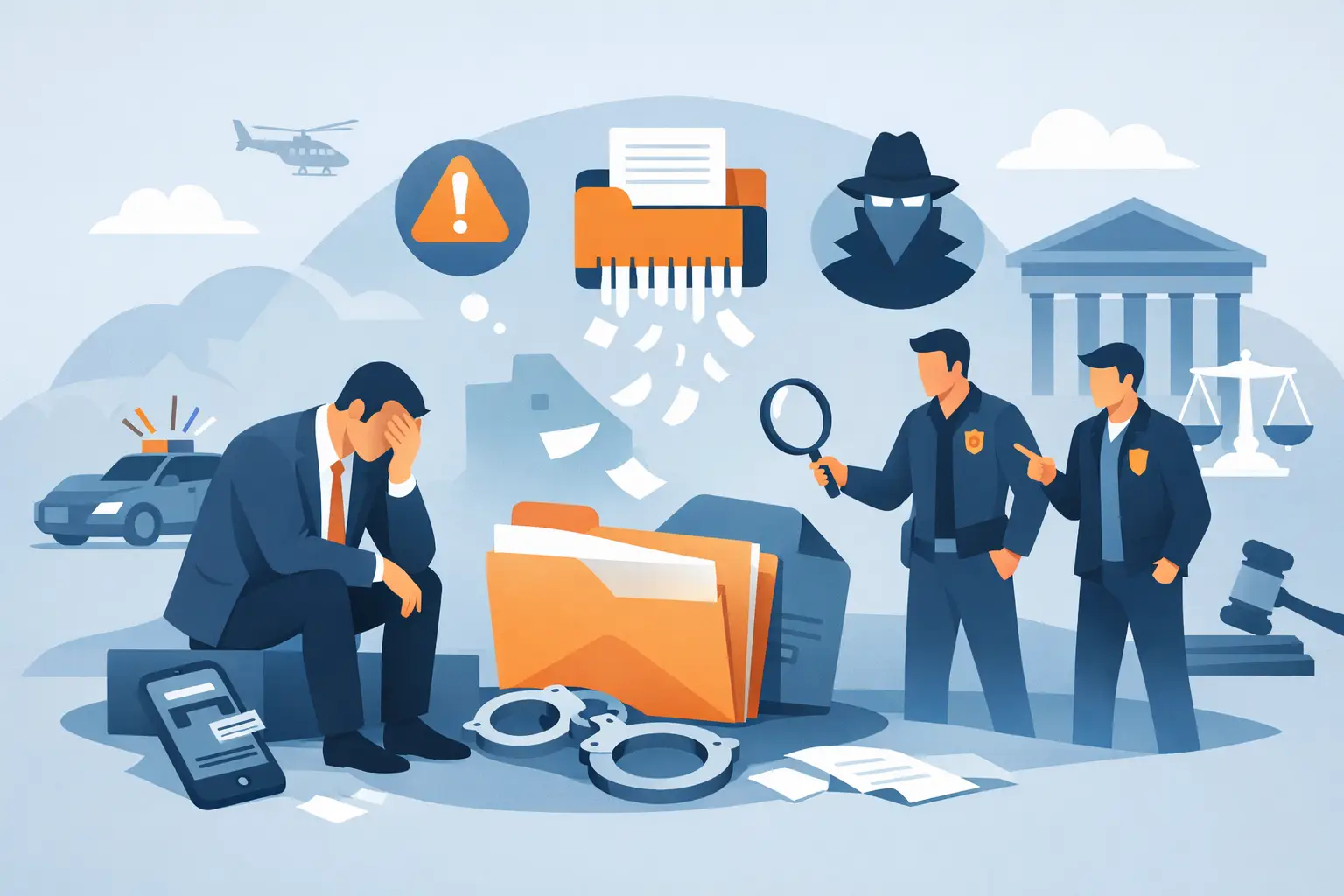
The strongest move is usually the least dramatic one. Do not call investigators on your own. Do not start explaining. Do not delete messages, reorganize files, or ask coworkers to "clean anything up." Those decisions can be interpreted as obstruction, even when made out of panic.
Instead, preserve everything. Save emails, texts, accounting records, calendars, cloud files, phone logs, and paper documents exactly as they exist. Then get defense counsel involved immediately. Early intervention allows your lawyer to evaluate the subpoena, identify deadlines, determine whether the request is overbroad, and control communication with the government before mistakes are made.
This is also the moment to keep the circle small. Many people feel pressure to tell business partners, employees, relatives, or friends what is happening. That can create new witnesses and new problems. Conversations you assume are private may later become evidence.
Responding to grand jury subpoena demands without making things worse
The central mistake in responding to grand jury subpoena matters is treating the subpoena like a paperwork issue. It is a defense issue.
A lawyer will start by asking practical questions that matter right away. Was the subpoena properly served? Is it a subpoena for records, testimony, or both? What date is listed for compliance? What entities or individuals are named? What time period does it cover? Does the language suggest the government is focused on a business transaction, a billing practice, financial transfers, or communications with specific people?
Those details are not technicalities. They are clues. A narrowly drafted subpoena can reveal the government has a defined theory already. A broad subpoena may suggest investigators are still mapping relationships and records. The strategy is different in each situation.
In many cases, counsel can communicate with the prosecutor before the return date. That may mean clarifying what is actually being requested, negotiating the scope of production, arranging staged compliance for large data sets, or addressing privilege issues. It may also mean learning whether your testimony is being sought and, if so, under what circumstances.
What should never happen is self-directed compliance without a legal review. Turning over privileged communications, producing records that are not actually responsive, or making informal statements alongside document production can do lasting damage.
If the subpoena demands testimony
A subpoena for testimony raises even higher stakes. Grand jury proceedings are closed to the public, controlled by the prosecution, and not a place for casual explanation. Your attorney generally cannot accompany you into the grand jury room itself, but counsel can prepare you thoroughly before you appear and remain available outside.
The key issue is not simply whether you are willing to answer questions. It is whether answering questions serves your interests at all. In some situations, a witness may invoke Fifth Amendment protections. In others, the government may offer immunity, but that does not automatically end the risk. Immunity has limits, and accepting it without careful analysis can be a serious mistake.
Clients are often surprised by how easy it is to give an answer that is technically incomplete, imprecise, or inconsistent with a document the government already has. Federal prosecutors do not need a dramatic confession to make a case. Sometimes they build charges around false statements, concealment, or contradictions.
That is why testimony preparation is not about rehearsing a story. It is about understanding the investigation, your legal position, the potential pressure points, and when asserting constitutional rights may be necessary.
Documents, phones, and business records
Many grand jury subpoenas focus on records because records often tell a cleaner story than witnesses do. Bank activity, wire transfers, invoices, shipping records, tax filings, encrypted chats, bookkeeping entries, and location data can become the backbone of a federal case.
For professionals and business owners, this creates a second layer of risk. The records requested may belong partly to a business, partly to individuals, and partly to third parties. There may also be attorney-client communications, work-product issues, medical privacy concerns, or confidential corporate material mixed into the data set.
A strategic response requires more than gathering files. It requires review, organization, privilege analysis, and careful production. In some cases, counsel may recommend a protective approach that limits unnecessary disclosures while still complying with lawful obligations. In others, the response may expose broader concerns that call for immediate defense planning beyond the subpoena itself.
Witness, subject, or target - why the distinction matters
Not everyone who receives a subpoena is in the same position. A witness may have information but no known criminal exposure. A subject falls within the scope of the investigation and could become more exposed as evidence develops. A target is someone the government believes committed a crime and is likely to charge.
The problem is that people are not always clearly told where they stand. Even when the government uses the word witness, defense counsel should evaluate the facts independently. Investigators may be testing your version, locking you into statements, or seeking records that complete a case already underway.
That is where experienced federal defense work matters. A trial-ready lawyer is not just asking how to meet a deadline. The lawyer is assessing where the case is going, what the government may do next, whether parallel seizure or forfeiture action is possible, and how to protect your freedom, business, professional license, and reputation before formal charges arrive.
Common mistakes that create avoidable exposure
Panic usually produces the same set of bad decisions. People delete messages because they think the old texts are irrelevant. They call agents back to "clear things up." They produce only some records because they assume the government does not need the rest. They ask an employee to handle the response internally. They talk too much to friends or coworkers. They wait until the deadline is close because they hope the issue will disappear.
It does not disappear.
A subpoena is often the beginning of a critical defense window. What happens early can influence charging decisions, search warrants, proffer discussions, asset restraint issues, and whether prosecutors view you as cooperative, careless, deceptive, or represented by someone prepared to fight.
Why speed and strategy matter in South Florida federal cases
Federal investigations in Miami move fast and often involve multiple agencies, financial analysis, digital evidence, and coordinated witness interviews. Delay gives the government time, not you. When counsel steps in early, the defense can start preserving favorable evidence, identifying legal vulnerabilities in the government's theory, and preventing unforced errors.
For clients with international ties, immigration concerns, licensed professions, or closely held businesses, the stakes are even higher. A grand jury subpoena can affect travel, banking relationships, employment, contracting, and public reputation long before an arrest. That is why the response has to be disciplined from the start.
At The Law Offices of Paul D. Petruzzi, P.A., that means treating the subpoena as part of a larger federal defense strategy, not as an isolated administrative task.
If you are holding a subpoena in your hand, this is not the time to guess your way through it. The smartest response is a controlled one - protect the records, protect your rights, and let experienced defense counsel take the first call.
Last updated: June 9, 2026
Important Disclaimer
This article is for general informational purposes and does not constitute legal advice. Reading this article does not create an attorney–client relationship. If you need legal assistance, please contact us for a Free Consultation.