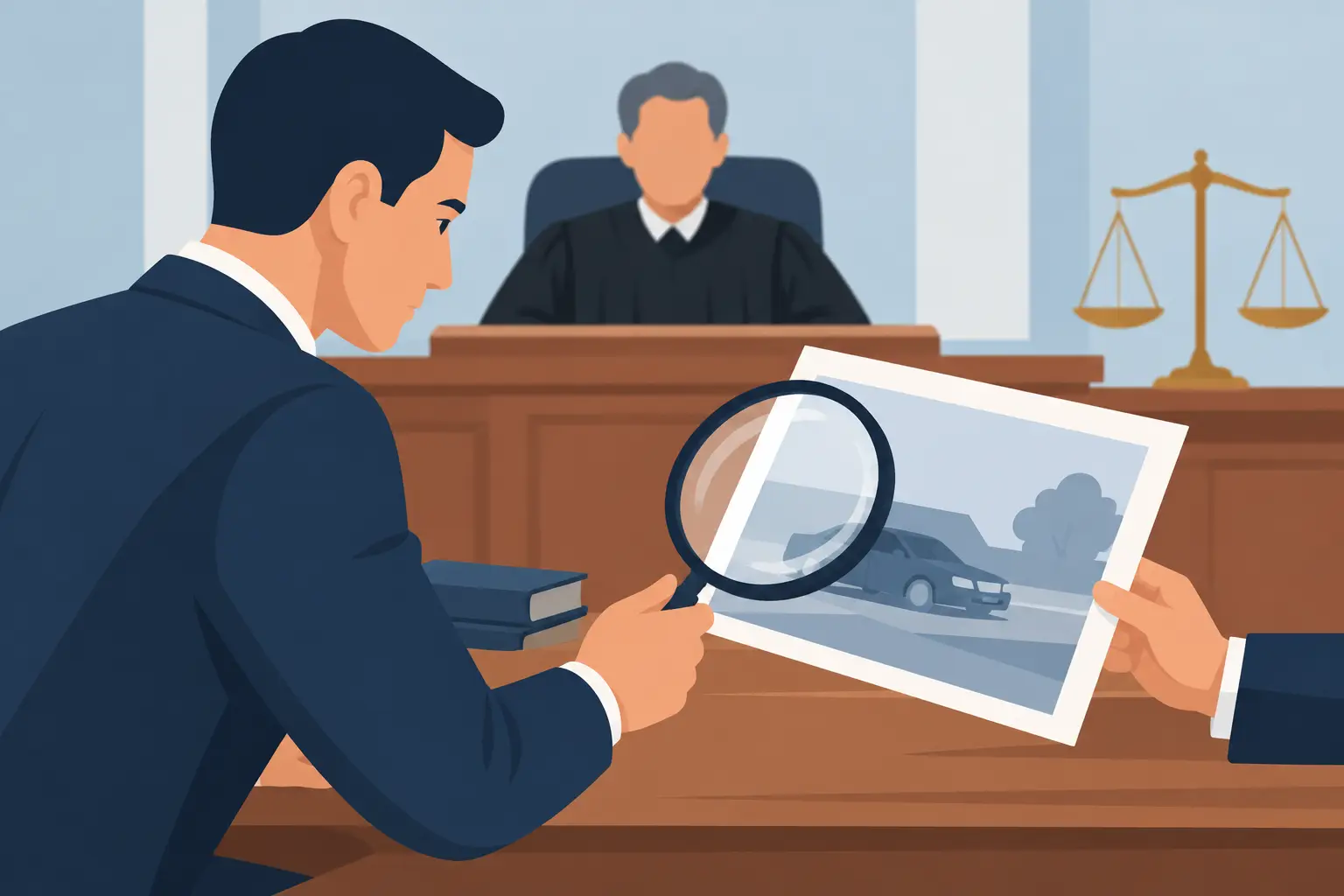
A criminal case can appear overwhelming when prosecutors say they have drugs, messages, financial records, surveillance video, or a witness who identifies you. But an accusation is not proof, and evidence is not automatically admissible simply because law enforcement collected it. The best ways to challenge evidence depend on how it was obtained, whether it can be authenticated, whether it is reliable, and whether the government can connect it to you.
In Miami-Dade County and the Southern District of Florida, those questions should be addressed early. A defense lawyer may be able to seek suppression of unlawfully obtained evidence, prevent unreliable material from reaching the jury, or expose weaknesses that create reasonable doubt. The correct strategy depends on the facts, the charges, and whether the case is in Florida state or federal court.
Challenging Evidence Starts With Its Source
The first question is often simple: how did police or federal agents get this evidence? The Fourth Amendment protects people against unreasonable searches and seizures. If officers violated that protection, a court may exclude the resulting evidence through a motion to suppress.
A warrant is not always required, but police must usually have a valid legal basis for a search. Common issues include a traffic stop made without reasonable suspicion, a home search conducted without valid consent or a warrant, a search warrant based on insufficient or misleading information, or a search that exceeded the warrant's scope.
For example, an officer may lawfully stop a vehicle for a traffic infraction, but that does not give the officer unlimited authority to search every part of the vehicle. Likewise, a person may voluntarily consent to a search, but consent can be challenged if it was coerced, unclear, or given by someone without authority over the area searched.
A successful suppression motion can be significant. If drugs, firearms, electronic devices, statements, or financial records were discovered through an illegal search, the prosecution may lose essential proof. Still, suppression is fact-specific. Prosecutors may argue that an exception applies, such as valid consent, plain view, exigent circumstances, inevitable discovery, or a good-faith reliance on a warrant.
Best Ways to Challenge Evidence Before Trial
The strongest defense work frequently happens before a jury is selected. Once retained, defense counsel can review reports, recordings, warrants, laboratory materials, and other discovery to identify evidence that should be excluded or tested.
Challenge an unlawful statement or confession
Statements to law enforcement can be powerful evidence, but they are not beyond challenge. A statement may be suppressible if officers questioned a person in custody without providing required Miranda warnings, continued questioning after the person clearly invoked the right to remain silent or requested counsel, or obtained a statement through coercive tactics that made it involuntary.
Not every conversation with police requires Miranda warnings. The issue is generally whether the person was in custody and subject to interrogation. Even when Miranda does not apply, the Due Process Clause requires a confession to be voluntary. The circumstances matter, including threats, promises, intoxication, fatigue, language barriers, age, and the length and conditions of questioning.
Test whether the evidence is authentic
The government must show that an item is what it claims to be. This is particularly important with text messages, social media posts, recorded calls, body-camera footage, surveillance video, and digital records.
A screenshot does not prove who wrote a message. A video file does not necessarily establish when it was recorded, whether it was edited, or who appears in it. A phone found near a person does not automatically prove that person owned, controlled, or used the device. The defense can examine account records, device extraction reports, metadata, witness testimony, and gaps in the handling of the evidence.
In federal cases, electronic evidence may arrive through extensive data productions. In a fraud, money laundering, conspiracy, or drug trafficking investigation, the volume of records can make careful review especially important. The government may have thousands of communications yet still lack reliable proof that a particular defendant sent, received, understood, or acted on a message.
Examine the chain of custody
Physical evidence should have a documented history from collection through testing and courtroom presentation. A break in the chain of custody does not always require exclusion, but it can raise serious questions about contamination, substitution, tampering, or mistaken identification.
This issue may arise with seized narcotics, firearms, biological samples, cash, or digital devices. The defense should compare police reports, property receipts, laboratory logs, photographs, and testimony. Inconsistencies can affect whether the evidence is admitted and, even if admitted, how much weight a jury gives it.
Challenge forensic evidence and expert opinions
Forensic evidence can sound conclusive when presented with technical language. It may not be. Drug testing, DNA analysis, fingerprint comparisons, firearm examinations, cell-site data, financial tracing, and digital forensics all involve methods, assumptions, and human decision-making.
Florida and federal courts have rules governing expert testimony. A qualified expert must use reliable methods and apply them reliably to the facts at issue. A defense attorney may challenge the expert's qualifications, the testing procedures, laboratory errors, contaminated samples, unsupported conclusions, or an opinion that goes beyond what the science can actually establish.
Sometimes the right response is exclusion. In other cases, cross-examination and an independent expert are more effective. For example, an analyst may correctly identify a controlled substance but be unable to establish who possessed it, how long it was present, or whether a tested sample represents the entire quantity alleged.
Question Witness Reliability, Not Just Witness Intent
A witness does not have to be lying for testimony to be unreliable. Memory changes over time. Stress, poor lighting, distance, alcohol, fear, suggestive identification procedures, and repeated discussions with police can all affect what a person believes they saw.
Eyewitness identification deserves close scrutiny. A witness may be confident and still mistaken. Defense counsel can examine the original description, the time between the event and identification, the lineup or photo-array procedure, prior failures to identify someone, and whether officers unintentionally influenced the process.
Cooperating witnesses also require careful evaluation. In state and federal cases, a co-defendant, confidential informant, or former associate may expect a reduced sentence, charging consideration, money, or other benefits. Those incentives do not automatically make testimony inadmissible. They do, however, provide a legitimate basis to investigate bias, motive, prior inconsistent statements, and the details of any agreement with the government.
The prosecution also has constitutional disclosure obligations. Under Brady principles, the government must disclose material evidence favorable to the defense. Under Giglio principles, this can include information that significantly impeaches a government witness, such as promises, benefits, or prior inconsistent statements. A prompt and focused request for this information can be essential.
Use Discovery to Find What the Government Did Not Show You
A police report is usually a summary, not a complete record. It may omit an unclear body-camera interaction, an unsuccessful field test, a witness's uncertainty, or surveillance footage that fails to support the officer's account.
Florida criminal procedure and federal criminal procedure provide mechanisms for obtaining discovery, although the scope and timing differ. The defense should seek and review relevant reports, recordings, photographs, lab reports, warrant materials, witness statements where available, and digital evidence. In appropriate cases, counsel may investigate independently, interview witnesses, inspect a location, obtain business records, or preserve evidence before it disappears.
This is one reason early representation matters. Surveillance systems may overwrite footage. Phone data can be lost. Witness memories fade. Deadlines for motions and notices can also arrive quickly after formal charges are filed.
Do Not Confuse Excluding Evidence With Beating the Case
Evidence can be challenged in more than one way. A suppression motion seeks to keep unlawfully obtained evidence out of court. An evidentiary objection may prevent unreliable, irrelevant, unfairly prejudicial, or hearsay evidence from being admitted. Cross-examination, contrary records, and defense experts can attack the credibility or weight of evidence that the judge allows the jury to hear.
Not every weak point leads to dismissal, and not every legal objection succeeds. A case may still proceed when some evidence is excluded. Conversely, the government's evidence may be legally admissible but too uncertain to prove guilt beyond a reasonable doubt. A sound defense strategy evaluates both the legal rules and the practical story the evidence tells.
What to Do When You Believe Evidence Was Obtained Illegally
Do not attempt to alter, delete, hide, or destroy evidence. Those actions can create additional legal exposure and may be interpreted as consciousness of guilt. Do not discuss facts of the case with investigators or potential witnesses without first obtaining legal advice.
Preserve what may help your defense, including messages, receipts, location information, names of witnesses, and details about the stop, search, arrest, or interview. Write down what happened while your memory is fresh, but keep those notes private and discuss them with counsel. If police have contacted you, served a subpoena, executed a search warrant, or filed charges, speak with a qualified Miami criminal defense attorney as soon as possible.
The evidence in a criminal case should be examined, not accepted at face value. Careful early review can protect constitutional rights, identify weaknesses in the prosecution's proof, and give you a clearer basis for making critical decisions about your defense.
Last updated: November 8, 2026
Important Disclaimer
This article is for general informational purposes and does not constitute legal advice. Reading this article does not create an attorney–client relationship. If you need legal assistance, please contact us for a Free Consultation.